What does a kissing bug bite look like?
A kissing bug bite usually looks like a small, raised red bump with one tiny hole in the middle, where the beak went in. A 2014 review led by Stephen Klotz, a University of Arizona physician, describes this central puncture. The bump can swell, turn reddish to purple, and itch for 1 to 2 weeks, the University of Arizona says.
Bites can be single or grouped. UC IPM, the University of California pest program, describes several bites together on the face, neck, arms or legs. A strong reaction can become a large welt that lasts several days. Klotz and colleagues say the swelling can last up to 7 days, and a severe reaction up to a month.
There is no single look, though. Texas A&M says there is no typical reaction: like mosquito bites, some people show almost nothing and others react strongly. That is why a bite mark cannot prove a kissing bug bit you. Bed bug, mosquito and spider bites can look the same, the University of Arizona and UC IPM note.
People who have been bitten describe it the same way. One camper on Reddit said the bites looked like red marks “with one tiny hole in the middle.” A Tucson resident wrote that a round mark about 1/4 inch wide turned into a scab after a day or two. These are single accounts, not measurements, but they match the medical descriptions.
Where on the body kissing bugs bite
Kissing bugs bite whatever skin is uncovered while you sleep. The University of Arizona lists the face, neck, arms and legs, and sometimes the chest. The same source says they often bite around the mouth or on the face, which is where the “kissing” name comes from. Still, a kissing bug bite on the leg or arm is common too.
A swollen lip or eyelid needs more attention than a bump on the arm. With trouble breathing or hives, it can be a severe allergic reaction: call 911. A swollen eyelid that shows up on its own in the weeks after a bite needs a doctor, for reasons covered in the Chagas section below.
Why this page shows no bite photos
Many sites show kissing bug bite pictures. We do not, on purpose. The University of Arizona says a bite cannot be identified without the insect, and Texas A&M says it is not usually possible. A photo of someone else’s skin invites a wrong match. The useful photo is of the bug.
If you find a bug in the bed or the bedroom, take a clear photo from above and from the side, then trap it. Our kissing bug identification guide shows the 5 features to check, and the look-alikes that fool most people.
Does a kissing bug bite hurt?
No, a kissing bug bite almost never hurts at the time. The bug’s saliva numbs the skin, the University of Arizona says, and Texas A&M notes that its mouthpart is as thin as a tiny needle. Most people sleep through a meal that takes 10 to 30 minutes, according to the University of Arizona.
So why do some people say the bite hurt? The Klotz review explains that these reports usually come from a delayed allergic reaction, not the bite itself. Hours later the spot can itch hard, feel tender, or swell into a painful welt. In an older study that Klotz cites, 12 of 481 people (2.49%) had a mild reaction, usually itching. Reactions tend to grow stronger after many bites.
A bite that hurts sharply at once points to a different bug. Wheel bugs, masked hunters and other assassin bugs bite people mainly when handled or trapped, and that bite hurts right away. Our assassin bug guide covers those bites and how long the pain lasts.
Kissing bug bite symptoms, from the first night to weeks later
Most kissing bug bite symptoms stay on the skin and fade within 1 to 2 weeks. Two kinds of signs matter more. An allergic reaction can start within minutes to hours of the bite. The early signs of Chagas, such as fever, come about 2 weeks later. The timeline below shows what to expect and when to act.
Kissing bug bite timeline: what you may notice and what to do
During the night
- What you may notice
- Usually nothing. Most people stay asleep.
- What it means and what to do
- The numbing saliva at work. The bug may be in the bedding or drapes in the morning.
Minutes to hours after
- What you may notice
- Hives, swollen lips, face or throat, trouble breathing, dizziness, vomiting
- What it means and what to do
- Possible anaphylaxis. Call 911.
The next morning
- What you may notice
- A red bump with a tiny central hole, itching, one bite or a group
- What it means and what to do
- A normal reaction. Wash it and use the first aid below.
Days 1 to 7
- What you may notice
- Swelling, a welt, tenderness, reddish to purple color
- What it means and what to do
- Usual for a local reaction. Klotz says swelling can last up to 7 days, and a swollen eyelid in these first days is most often allergy.
1 to 2 weeks
- What you may notice
- The itch fades, sometimes leaving a small scab
- What it means and what to do
- Most bites have healed by now.
About 2 weeks after
- What you may notice
- Fever, tiredness, body aches, a rash, or one swollen eyelid
- What it means and what to do
- See a doctor soon and mention the bug. These can be early Chagas signs.
Up to a month
- What you may notice
- A large welt that is slow to settle
- What it means and what to do
- A severe local reaction. See a doctor if it spreads, feels hot or has pus.
Timeline from the University of Arizona (2025), Klotz and others (2014), UC IPM Pest Notes 7455, CDC (2024) and Mayo Clinic (2024). Times vary from person to person.
A “kissing bug rash” is usually one of two things. Hives, raised itchy welts that spread over the body, are a whole-body allergic reaction, and Mayo Clinic lists them among the signs to call 911 for. Redness and swelling around one bite is a local reaction, and it settles with first aid.
Watch for infection too. Scratching can break the skin and let bacteria in. Mayo Clinic says to see a health care professional if the swelling gets worse, the bite shows signs of infection, or you do not feel well.
Allergic reactions: the real danger of a kissing bug bite
In the US, the biggest danger from a kissing bug bite is an allergic reaction, not Chagas. In a 2020 study in Arizona, 11 of 105 people who had been bitten (10.5%) had 32 episodes of anaphylaxis between them. The University of Arizona says the allergy builds up after several bites.
That study, led by University of Arizona researchers in the American Journal of Medicine, followed homes in Tucson and Bisbee, Arizona, in 2017 and 2018. Residents caught 521 kissing bugs in or near their homes. The 105 people who had been bitten remembered more than 2,200 bites between them. In their words, the bites “caused severe, life-threatening reactions.”
Other numbers point the same way. The Klotz review records at least 2 deaths from kissing bug anaphylaxis in the US. UC IPM says about 7% of people tested where the bugs are common could develop a serious reaction. Texas A&M adds that severe reactions seem more common in the Southwest. A common kind in California and Arizona, Triatoma protracta, may be more likely to cause them.
Allergy to one kind does not always mean allergy to all. Klotz notes that the allergens differ between species. People who react badly are often woken at night by itching all over or by trouble breathing, rather than by the bite itself.
If you think you may be allergic, see a doctor or an allergist, as UC IPM advises. The University of Arizona says emergency allergy kits are often prescribed for people who react severely. Avoiding more bites matters most, because the allergy can grow with each round of bites. Our bee sting guide explains how to tell a normal swelling from an allergic one, and the same signs apply here.
What to do after a kissing bug bite
After a kissing bug bite, check for allergy signs first, then wash the bite with soap and water and do not scratch. A cold, damp cloth for 10 to 20 minutes eases the swelling, Mayo Clinic says. Keep the bug if you can find it, because a bite alone cannot be identified.
After a kissing bug bite: step by step
Check for emergency signs first
Trouble breathing, a swelling face, lips or throat, hives, dizziness or fainting, a weak and rapid pulse, or vomiting can mean a severe allergic reaction. Call 911 now, even for one or two of these. Everything below is for a mild reaction that stays at the bite.
Wash the bite with soap and water
The University of Arizona and UC IPM both give this advice. Washing also removes any droppings the bug left on the skin near the bite, which is where the Chagas parasite lives.
Do not scratch or rub
UC IPM says never to scratch the bite, put your fingers in your mouth or nose, or rub your eyes. That is how droppings get into the body. Wash your hands after touching the bite.
Cool the swelling
Mayo Clinic suggests a cloth dampened with cold water or filled with ice, held on the bite for 10 to 20 minutes. If the bite is on an arm or a leg, raise it.
Ease the itch
Mayo Clinic lists calamine lotion or an over-the-counter hydrocortisone cream on the skin, and an antihistamine by mouth for itching. Follow the package directions. Ask a pharmacist first for a child, during pregnancy, or if you take other medicines.
Wash the bedding
UC IPM advises laundering bedding and clothing soiled by the bug. While the sheets are off, check the pillow, the mattress seams and the gap between the mattresses for the bug.
Keep the bug if you find it
Do not touch it with bare hands. Texas A&M says to pick it up with a glove or a small plastic bag. Seal it in a jar or bag and freeze it. The University of Arizona says to take the bug with you when you see a doctor, because a bite cannot be identified without it.
Tell your doctor, and watch the next few weeks
Ohio State advises a visit to your regular doctor after any known kissing bug bite, both for allergy concerns and so the case is on record. Go sooner if the swelling keeps growing, the bite looks infected, or you get a fever or a swollen eyelid in the weeks after.
No medicine prevents Chagas after a bite, CDC says, and there is no vaccine. That is why the washing and the no-scratching steps matter. If you found the bug, our kissing bug page explains how to trap it and send a photo to be identified, including the Texas A&M program that accepts photos from any state.
Can one kissing bug bite give you Chagas disease?
One kissing bug bite rarely gives anyone Chagas disease in the US. The parasite lives in the bug’s droppings, not its saliva, so the droppings have to get into the bite, an eye or the mouth. In the 2020 Arizona study, all 116 Chagas tests on people from homes with bugs came back negative.
That result stands out, because the bugs were infected. In the same study, 51.1% of the bugs caught in Tucson and 17% of those in Bisbee carried the parasite. Even so, the authors found no blood evidence of Chagas among the people bitten. Klotz, one of the authors, has said the parasite may get into a bite only once in several thousand bites in Arizona.
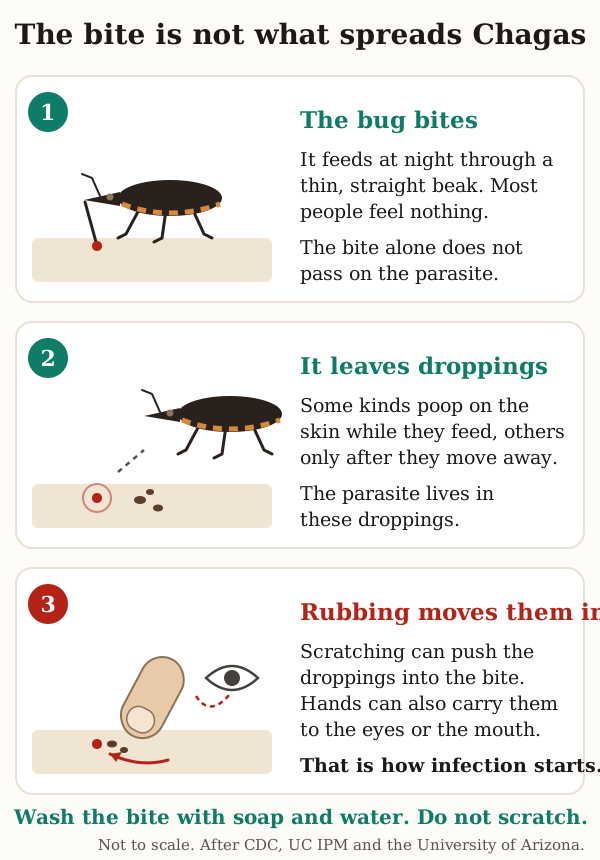
Why so rare? Timing is one reason. The Klotz review says southwestern kinds often leave droppings only after they finish feeding and move away. A 2025 review in CDC’s journal Emerging Infectious Diseases notes that the main Texas and eastern kinds sometimes leave droppings while they feed. That could raise the risk a little in those areas, though local cases are still rare.
Local cases do happen. The same 2025 review counts 50 probable and confirmed locally acquired cases in Texas from 2013 to 2023, an average of about 4 or 5 a year. Our guide to Chagas risk and symptoms has the national numbers and the long-term signs.
A swollen eyelid after a bite: allergy or Chagas?
CDC lists swelling of one eyelid, called Romaña’s sign, as an early sign of Chagas. It happens when droppings are rubbed into the eye or into a bite near it. But the Klotz review says that in the US, a swollen eyelid after a kissing bug bite is most often an allergic reaction to the saliva. You cannot tell the two apart by looking, so see a doctor and mention the bug.
Do you need a Chagas test after a kissing bug bite?
Usually not. The University of Arizona says that finding a kissing bug at home, or being bitten by one, does not by itself mean you need testing. A test may make sense in 4 situations:
- You get symptoms in the weeks after a bite, such as fever, a rash or a swollen eyelid.
- A blood donation screen came back positive for the parasite.
- You have lived in Mexico, Central America or South America, where Chagas is common.
- Your mother has Chagas, since CDC says it can pass from mother to child.
Early Chagas often causes mild symptoms or none at all, CDC says, so tell your doctor about a known bite even if you feel fine. Testing is commercially available, so your own doctor can order it. For a long-term infection, CDC says no single test is enough: doctors use two or more antibody tests that work in different ways. A very new infection can sometimes be seen in a blood sample under a microscope. The University of Arizona adds that a positive result needs a second test to confirm it.
Do not donate blood to get tested. CDC says blood donor screening is not meant to diagnose anyone. Reddit threads ask about this often, usually from people whose doctor would not order a test. If your doctor is unsure, CDC runs an inquiry line for health care providers at 404-718-4745.
Kissing bug bite or something else?
Most bites people blame on kissing bugs come from something else. Bed bugs, mosquitoes, fleas and spiders leave bumps that can look the same, and Texas A&M says you usually cannot tell what bit you from the bite. Check 3 things instead: the bug you find, the pattern of the bites, and the place.
Clues that point to a kissing bug or to something else
A dark bug with a cone-shaped head and a striped edge, found in the bed or bedroom
- Most likely
- Kissing bug
- What else to know
- Painless night bites; the bug is about 1/2 to just over 1 inch long
Bites in a line or zigzag, tiny dark spots on the sheets, small flat bugs in mattress seams
- Most likely
- Bed bugs
- What else to know
- Far more common indoors; the bugs are about 3/16 inch long
Bites mostly below the knee, with a pet in the house
- Most likely
- Fleas
- What else to know
- Check the pet and its bedding
Sharp pain at the moment of the bite, often outdoors or while handling a bug
- Most likely
- Assassin bug, wheel bug or masked hunter
- What else to know
- A painful bite if handled
Single itchy bumps after time outside around dusk
- Most likely
- Mosquitoes
- What else to know
- Itch starts quickly, unlike a kissing bug bite
A shield-shaped bug that smells when handled
- Most likely
- Stink bug
- What else to know
- Feeds on plants, not blood
Kissing bug features from Texas A&M and CDC; bed bug and flea patterns from our bed bug bites guide; wheel bugs from Texas A&M Insects in the City; stink bugs from the Missouri Department of Conservation.
A bite pattern is a clue, not proof. For lines of bites and dark spots on the sheets, start with our guide to what bed bug bites look like. To compare many kinds of bites at once, use the bug bite identification chart.
Searches for a “kissing bug stink bug bite” come from a common mix-up. A Reddit post titled “Please don’t tell me it’s a kissing bug” turned out to be a stink bug. Stink bugs have a wide shield shape and a small head, and most feed on plants, not blood.
Kissing bug bites on dogs and cats
Kissing bugs bite dogs and cats too, but for a pet the bite is not the main risk. A 2025 review says dogs most likely get Chagas by eating the bugs. It found infection in 10% to more than 50% of dogs tested in parts of Texas. Call your vet if your dog may have eaten one.
Signs of Chagas in dogs look like heart disease: tiredness, poor appetite, trouble breathing, and sometimes sudden death, says the Texas A&M Veterinary Medical Diagnostic Laboratory. An infected dog can look healthy for months or years, and a vet can order a blood test. People and dogs both catch it from kissing bug droppings, the lab says. CDC advises having pets sleep indoors, especially at night.
How to stop more kissing bug bites
Stopping the next kissing bug bite matters more than treating this one, because the allergy can grow with each round of bites. Start with 3 free steps tonight: check the bed and the gap between the mattresses, keep doors closed and curtains drawn after dark, and bring pets inside at night.
- Check sleeping areas. The University of Arizona says the space between mattresses is a favorite hiding place. Look there and in other dark, quiet spots from mid-spring to mid-fall.
- Keep the light in. Close doors and draw the curtains in lit rooms at night, because adults fly toward lights.
- Change porch bulbs to LED lights that give off little UV light, which draws fewer insects.
- Seal the way in with weather stripping, door sweeps and silicone, and screen windows, doors and vents.
- Clear piles of lumber, firewood and debris near the house. A pest professional can remove packrat nests close to it.
- Use a bed net tucked under the mattress if you have had a severe reaction. The University of Arizona calls it the best barrier for people at risk of anaphylaxis.
For the full list of ways to keep the bugs out, from yard lights to rodent nests, see keeping kissing bugs out of your home.
Myths about kissing bug bites
At least 7 common beliefs about kissing bug bites are wrong or out of date. Some come from health sites that rank well on Google, and some from forum posts. Here is what each one gets wrong, with the source that corrects it.
Myth 1
Myth: “You can tell a kissing bug bite by how it looks.”
Truth: Texas A&M says it is not usually possible to tell what bit you from the bite. The University of Arizona says bites cannot be identified without the insect.
Myth 2
Myth: “A kissing bug bite gives you Chagas.”
Truth: The parasite is in the droppings, not the bite. In the 2020 Arizona study, all 116 Chagas tests on people from homes with bugs were negative.
Myth 3
Myth: “Kissing bugs only bite your lips.”
Truth: The University of Arizona lists the face, neck, arms and legs, and sometimes the chest. They bite whatever skin is uncovered.
Myth 4
Myth: “A kissing bug bite hurts like a sting.”
Truth: Texas A&M says most people report no pain. Klotz explains that reports of pain come from a delayed allergic reaction. A bite that hurts at once is more likely an assassin bug.
Myth 5
Myth: “An epinephrine pen prevents an allergic reaction.”
Truth: One health site says it helps prevent one. Epinephrine treats a reaction that has started, and Mayo Clinic describes using it while you wait for emergency help.
Myth 6
Myth: “Get treated for Chagas right away after any bite.”
Truth: One health site says to seek treatment early after a bite. The University of Arizona says a bite alone does not call for a test, and treatment follows a confirmed diagnosis.
Myth 7
Myth: “Chagas is easy to diagnose with one blood test.”
Truth: CDC says no single test is enough for a long-term infection. Doctors use two or more different tests.
When to call someone
Most kissing bug bites heal with home care, but Ohio State advises a routine doctor visit after any known bite. Get help sooner in 4 cases: a severe allergic reaction, a bite that looks infected, illness in the weeks after a bite, or bugs you keep finding indoors. Here is who to call.
- 911 for trouble breathing, a swelling face, lips or throat, hives, or fainting after a bite.
- Your doctor after a known bite, and sooner if the swelling keeps growing, the bite looks infected, or you get a fever or a swollen eyelid in the weeks after. Take the bug.
- An allergist after any severe reaction, to plan for the next bite.
- Poison Control, 1-800-222-1222, if someone swallows a pesticide or a medicine meant for the skin.
- The Texas A&M kissing bug program to identify the bug from a photo, from any state.
- The Texas Department of State Health Services if you live in Texas and the bug may have bitten someone.
- Your vet if your dog may have eaten a kissing bug.
- A licensed pest professional if you find young, wingless bugs indoors or keep finding bugs over several weeks.
Not sure what you found? Take a sharp photo of the bug from above and try our bug identifier by picture, then confirm a possible kissing bug with an expert.
Medical disclaimer. This page is for general information only. It is not a medical diagnosis. If you have severe symptoms, trouble breathing, swelling of the face or throat, fast spreading redness, fever, severe pain, pus, or signs of infection, contact a doctor or your local emergency number.
Pest control disclaimer. Photo-based identification can help, but it is not always perfect. For dangerous spiders, large infestations, or anything you are unsure about, contact a licensed pest control professional.
Kissing bug bite FAQ
Is there a cure for a kissing bug bite?
How do you know if you have been bitten by a kissing bug?
What time of year do kissing bugs bite?
Do kissing bugs bite every night?
Related guides
Kissing bug
How to identify the bug, where it lives by state, and the full Chagas picture.
Assassin bug
Its garden relatives, with a bite that hurts right away.
Bed bug bites
The far more common cause of bites found in the morning.
Bug bite identification
A chart of 20 bites by look, place and timing.
Bee sting
First aid and how to tell a normal reaction from an allergic one.
Bug identifier by picture
Upload a photo of the bug for a free ID.
Sources
- Behrens-Bradley N and others, Kissing Bugs Harboring Trypanosoma cruzi, Frequently Bite Residents of the US Southwest But Do Not Cause Chagas Disease, American Journal of Medicine 133(1):108-114 (2020)
- Klotz SA and others, Kissing Bugs in the United States: Risk for Vector-Borne Disease in Humans, Environmental Health Insights 8(Suppl 2):49-59 (2014)
- University of Arizona Cooperative Extension, What You Should Know About Kissing Bugs, az1992 (September 2025)
- University of Arizona Health Sciences, U of A physician-scientist sets the record straight on kissing bugs (December 8, 2025)
- UC Statewide IPM Program, Pest Notes: Conenose Bugs, Publication 7455 (updated July 2013)
- Ohio State University BYGL, The Ohio Kissing Bug Conundrum (September 16, 2025)
- Texas A&M University, Kissing Bugs and Chagas Disease: Frequently Asked Questions
- Texas A&M University, Kissing bug resources and data
- Texas A&M University, Found a Bug?
- Mayo Clinic, Insect bites and stings: First aid (April 10, 2024)
- CDC, About Chagas Disease (September 4, 2024)
- CDC, How Chagas Disease Spreads (February 4, 2026)
- CDC, Clinical Testing and Diagnosis for Chagas Disease (February 1, 2024)
- CDC, Treatment of Chagas Disease (February 1, 2024)
- CDC, Preventing Chagas Disease (February 4, 2026)
- Beatty NL and others, Chagas Disease, an Endemic Disease in the United States, Emerging Infectious Diseases 31(9), September 2025
- Texas A&M Veterinary Medical Diagnostic Laboratory, Testing considerations for canine Chagas disease (September 17, 2025)
- Texas A&M Insects in the City, Kissing bug identification requires closer look (2015)
- Missouri Department of Conservation, Field Guide: Stink Bugs