How to get rid of termites
To get rid of termites, confirm they are termites, find out which kind, and match the termite treatment to it. That takes 8 steps, and the first 4 cost almost nothing. You rarely need to rush: termites eat wood slowly, so a week spent getting two or three inspections changes little. What does matter is not spraying the few you can see.
Most readers arrive here after finding swarmers by a window, mud lines on a foundation, or pellets on a sill. If you are not sure yet, our guide to the signs of termites helps you check the whole house first. Then follow these steps in order.
The termite plan in 8 steps
Make sure it is termites
Check the antennae, waist and wings. Straight antennae, a thick waist and four equal wings mean termites. Bent antennae and a pinched waist mean ants, which need a different plan.
Work out which kind
Mud tubes mean subterranean termites. Small piles of six-sided pellets under pinholes mean drywood termites. Soaked, rotting wood means dampwood termites. The kind decides the treatment.
Do not spray or break things up
Leave mud tubes, pellets and damaged wood in place for the inspector. Store sprays kill the few you see and push the rest to feed somewhere else.
Do the free fixes now
Stop leaks and drips, pull mulch and soil back from the siding, move firewood away from the walls, and lift wood off the ground. None of this costs much, and every treatment works better with it done.
Get two or three inspections
Ask each company for the species, where they found it, the method, the product label, a diagram of what they will treat, and the warranty, all in writing.
Pick the method that fits the termite
Soil treatment or baits for subterranean termites. Tenting, heat or a spot treatment for drywood termites. A moisture repair for dampwood termites.
Follow the label on treatment day
The product label says when people and pets can come back in. Ask the applicator for that time before they start, and keep children off treated soil until it is dry.
Keep the treatment working
Do not dig, plant or pour concrete along the foundation without telling the company. Keep up yearly inspections, and keep bait stations serviced or they stop protecting the house.
Steps 1 and 2 decide everything that follows. A flying ant needs no termite treatment at all, and our page on telling termites from ants settles it with three checks. Likewise, a drywood colony in an attic beam will not die from a soil treatment, however good it is.
Termite treatment options compared
Termite treatment comes in five main kinds: a liquid termiticide in the soil, bait stations, a spot treatment injected into the wood, whole-house fumigation, and heat. The first two are for subterranean termites, which nest in the soil. The last three are for drywood termites, which live inside the wood. Liquid soil treatments protect for at least 5 years.
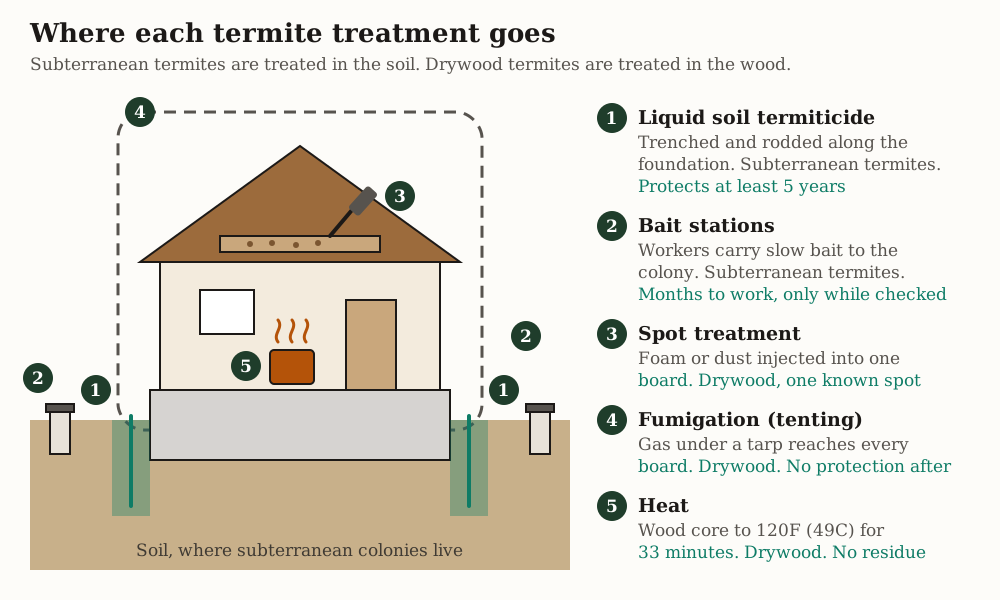
Table 1. Termite treatment methods at a glance
Liquid soil termiticide
- For which termite
- Subterranean, Formosan
- How it works
- A treated zone in the soil along and under the foundation, made by trenching, rodding and drilling slabs
- How long it protects
- At least 5 years, often longer
- Who does it
- A licensed company. Needs drills, rods and large tanks
Bait stations
- For which termite
- Subterranean, Formosan
- How it works
- Workers eat a slow-acting bait and share it, and the colony dies off
- How long it protects
- Only while someone checks and refills the stations
- Who does it
- A licensed company. Store kits are not proven
Spot treatment (foam, dust, liquid)
- For which termite
- Drywood in a known board; subterranean in one spot
- How it works
- Product injected straight into the galleries or a mud tube
- How long it protects
- The treated spot only
- Who does it
- A licensed company. Home-use products are not effective on drywood
Fumigation (tenting)
- For which termite
- Drywood, many or hidden colonies
- How it works
- The house is sealed under a tarp and filled with sulfuryl fluoride gas
- How long it protects
- None. Kills what is there now
- Who does it
- Licensed fumigators only
Heat
- For which termite
- Drywood
- How it works
- The wood is heated until its core reaches 120F (49C) for at least 33 minutes
- How long it protects
- None. Kills what is there now
- Who does it
- A licensed company
Borate wood treatment
- For which termite
- Mostly prevention, on bare wood
- How it works
- A borate solution soaks into unpainted wood and poisons termites that eat it
- How long it protects
- The treated wood, best applied during construction
- Who does it
- Pros, or a careful homeowner on bare wood
Liquid soil treatment
A liquid termiticide is the most common termite treatment for subterranean termites. The applicator digs a shallow trench along the foundation, pushes long rods into the soil, and drills through slabs, porches and garage floors near the walls. Then the termiticide goes in all around the house. The University of Kentucky says a typical job can use hundreds of gallons.
Today’s main termiticides are non-repellent. Termites cannot sense fipronil, imidacloprid or chlorantraniliprole, so they tunnel into the treated soil and die. Termites already in the walls die off too, because they can no longer get back to the soil for moisture. Older repellent products, mostly pyrethroids such as bifenthrin, keep termites out instead, and any gap lets them through. The University of Kentucky calls the non-repellent kind more reliable on the first attempt.
Bait stations
Bait stations are plastic tubes set into the soil every few feet around the house. Each holds wood or a cellulose bait laced with a slow-acting growth regulator, which stops termites from molting. Workers carry it back and share it, so the colony shrinks over months. Sentricon, Advance and Trelona are common bait systems, and licensed companies install and service all of them.
Baits use very little pesticide, which is why Texas A&M calls them the method most people see as the safest. The trade-off is time and upkeep. Termites have to find the stations first, and protection ends when the service contract ends. Some pest company pages say bait protection begins immediately. The University of Kentucky disagrees: termites may take weeks or months to find the stations, then months more to die off.
Spot treatments for drywood termites
A spot treatment puts a foam, dust or liquid straight into the tunnels of one infested board. The applicator drills small holes into the galleries, injects the product, and plugs the holes. It works well when the applicator finds the colony exactly. However, UC IPM warns that you can never be sure every hidden colony was treated, and that home-use products are not effective against drywood termites.
Fumigation (tenting)
Fumigation is the termite treatment that reaches a whole building at once. A licensed fumigator covers the house with tarps and fills it with sulfuryl fluoride gas, which reaches every board, including ones nobody can see. The gas kills drywood termites within several days. People, pets and plants must leave for several days while the fumigator fills the house with gas and then airs it out.
Tenting leaves nothing behind. It kills the termites inside today, but new drywood swarmers can fly in next year. It also does nothing for subterranean termites, whose colony lives in the soil under the tarp. Fumigation is a job for licensed fumigators only. Never try to gas a room or a house yourself.
Heat and other non-chemical treatments
Heat treatment raises all the wood in a house, or one part of it, to at least 120F (49C) and holds it there for at least 33 minutes, says UC IPM. You leave for hours instead of days. However, thick beams and wood on concrete or tile can stay too cool, and heat can damage plastics and wiring. Like tenting, it leaves no protection.
Microwave and high-voltage devices are also used on single drywood boards, and freezing is another option. All of them only work where someone has found the colony exactly. None of them works on subterranean termites, because that colony lives in the ground.
Which termite treatment fits your termite
Match the treatment to the termite. Subterranean and Formosan termites need a soil treatment or baits, never tenting. Drywood termites need tenting or heat when they are in many places, or a spot treatment in one known board. Dampwood termites need the leak fixed and the wet wood replaced. Termites in a stump or a woodpile need the wood removed.
Table 2. What you found, and the treatment it calls for
Mud tubes on the foundation, walls or piers
- The termite
- Eastern or other native subterranean
- The treatment
- Liquid soil treatment, or bait stations
- Can you do it yourself?
- No. A house needs professional equipment
Mud tubes, plus swarms of tan termites around lights at dusk in the Southeast
- The termite
- Formosan subterranean
- The treatment
- Soil treatment or baits, often both, plus finding any nest in a wall
- Can you do it yourself?
- No
Pellets below pinholes in one board, frame or piece of furniture
- The termite
- Drywood, one known colony
- The treatment
- Spot treatment or local heat, or replace the board
- Can you do it yourself?
- Only replacing the wood
Pellets in several rooms, the attic or behind walls
- The termite
- Drywood, many colonies
- The treatment
- Fumigation or whole-house heat
- Can you do it yourself?
- No. Licensed fumigators only
Large termites in soaked, rotting wood
- The termite
- Dampwood
- The treatment
- Fix the leak, dry the area, replace the wet wood
- Can you do it yourself?
- Yes, the repair
Termites in a stump, dead tree, woodpile or loose boards in the yard
- The termite
- Usually subterranean
- The treatment
- Remove the wood and check the foundation
- Can you do it yourself?
- Yes
Termites in a mailbox post, fence post or small shed not touching the house
- The termite
- Subterranean
- The treatment
- Replace the wood, or treat it with a product labeled for that use
- Can you do it yourself?
- Possibly, following the label
Not sure which you have? Look at what the termites leave behind. Mud means subterranean termites. Hard, six-sided pellets mean drywood, and our page on termite droppings and their look-alikes shows how to tell real pellets from sawdust and roach droppings. Our termite guide also shows which of the four US kinds live where you do.
Can you treat termites yourself?
Not for a house, in most cases. A proper soil treatment needs hundreds of gallons of termiticide, long rods, masonry drills and a map of every slab crack and pipe. The University of Kentucky and Texas A&M limit do-it-yourself termite treatment to small things away from the house. Think of a mailbox post, a fence, a shed or a woodpile.
The reason is not that the chemicals are secret. You can buy some professional termiticides online, and people on Reddit describe digging their own trench. But the hard part is reaching every place termites can enter: under the slab, inside block walls, around plumbing and beneath porches. EPA warns that a barrier treatment done wrong can contaminate the home and nearby drinking water wells, and still fail to stop termites.
Store products have a weaker record. Texas A&M tested hardware-store bait stations and could not show that they controlled termites. UC IPM says stores do not sell homeowners the products that work on drywood termites. The National Pesticide Information Center adds that only trained and licensed professionals may use some termiticides.
What DIY termite treatment can and cannot do
Check each clue below to narrow down what you saw.
Can: stop leaks, move mulch and firewood, and lift wood off the soil
This helps every treatment and costs little.
Also within reach: replace a single infested board, post or piece of trim
Bag and remove the wood so it does not sit near the house.
Can: treat a detached post, fence or shed with a product labeled for that use
Only if the label lists that use, at the rate it gives.
Cannot: reliably treat the soil under and around a whole house
Gaps under slabs and porches are where treatments fail.
Out of reach: drywood colonies hidden inside walls
That needs tenting, whole-house heat or a professional search.
Cannot: get you a warranty
A failed DIY job is not covered when repairs are needed.
If you use a termite product
Use only a product registered by EPA and labeled for termites in the place you are treating, and follow the label exactly. The label is the law. It sets the rate, the depth and where the product may go. EPA also notes that if a label has no directions to protect a structure, the product is not meant to. Never use less than the label says, and never use more.
What kills termites?
Termites in a house die from four things: a non-repellent termiticide in the soil, a slow bait they share with the colony, fumigant gas, or heat of at least 120F (49C). Almost anything kills the few termites you can see, from bug spray to boiling water. But those are a tiny share of a colony that can hold hundreds of thousands, so killing them changes nothing.
EPA makes the same point about products sold to kill termites. In its words, products that only claim to kill termites “have not demonstrated the ability to protect structures”. They are meant only for the termites that touch them.
What kills termites instantly?
A spray, a vacuum or a broom kills the termites you see right away. That is fine for a swarm of winged termites indoors, since swarmers do no damage, and the University of Kentucky notes that those that come out inside live only about a day. It does nothing to the workers inside the wood. Keep a few swarmers in a bag for the inspector before you clean up.
Do termite sprays work?
Store termite sprays, foams and stakes kill the termites they reach. The foams can help in a single board or a wall void, and stakes work like a small bait. Even so, the University of Kentucky says do-it-yourself products will seldom eradicate an existing termite problem. A spray on a mud tube also breaks the evidence an inspector needs.
Table 3. Termite sprays and products: what each kind does
Non-repellent soil termiticide
- Examples
- Fipronil (Termidor, Taurus SC), imidacloprid (Premise), chlorantraniliprole (Altriset)
- What it does
- Termites cannot detect it, tunnel in and die
- The catch
- Needs a full trench, rods and slab drilling at the label rate
Repellent soil termiticide
- Examples
- Bifenthrin, permethrin (pyrethroids)
- What it does
- Keeps termites out of treated soil
- The catch
- Any gap lets them through, and few die
Professional bait system
- Examples
- Sentricon, Advance, Trelona
- What it does
- Slow bait that stops molting, shared through the colony
- The catch
- Takes months, and only works while serviced
Foam or aerosol for wood and wall voids
- Examples
- Fipronil foam; retail termite foams such as Spectracide
- What it does
- Kills termites in the galleries it reaches
- The catch
- Misses colonies elsewhere in the house
Retail stakes and contact sprays
- Examples
- Store termite stakes, carpenter ant and termite sprays
- What it does
- Kill termites that touch or feed on them
- The catch
- EPA: kill claims do not mean the house is protected
Product names are examples, not endorsements. Use only an EPA-registered product labeled for termites, exactly as its label says.
Home remedies for termites, tested
No home remedy gets rid of termites. Vinegar, salt, dish soap, bleach, boiling water, boric acid and orange oil all kill the termites they soak. None of them reaches a colony living in the soil or deep inside a beam, so the feeding goes on out of sight. Spend the money on an inspection and a real termite treatment instead.
Table 4. Natural and home remedies for termites
Vinegar, salt water, dish soap such as Dawn
- What it really does
- Kills termites it soaks
- Stops the colony?
- No
- Verdict
- Skip it
Bleach, ammonia, boiling water
- What it really does
- Kills termites it soaks, and can harm wood, finishes and plants
- Stops the colony?
- No
- Verdict
- Skip it
Boric acid or borax powder
- What it really does
- A slow poison for termites that eat it
- Stops the colony?
- No. The colony is in the soil
- Verdict
- Only as a labeled borate wood treatment on bare wood
Diatomaceous earth
- What it really does
- Dries out insects that crawl through it
- Stops the colony?
- No
- Verdict
- Only a registered product, in cracks and crevices, never spread over soil
Orange oil (d-limonene), neem oil
- What it really does
- Kills termites in the gallery it is injected into
- Stops the colony?
- No
- Verdict
- Texas A&M: orange oil not shown to control termites in houses
Beneficial nematodes
- What it really does
- Tiny worms that can kill termites in a lab
- Stops the colony?
- No
- Verdict
- Texas A&M: not proven in buildings, cannot be recommended
Wet cardboard trap
- What it really does
- Draws termites to cardboard you then destroy
- Stops the colony?
- No
- Verdict
- Texas A&M: cardboard bait stations not shown to work
Sand barrier
- What it really does
- Sand of one exact size, 2 to 2.8 mm, that termites cannot tunnel through
- Stops the colony?
- Can block entry if laid right
- Verdict
- A construction method, not a cure. Ordinary sand does not work
Orange oil is the remedy people ask about most. It does kill drywood termites in the tunnels it is pumped into, but UC IPM says lab and field tests from two universities question how well it works. Texas A&M says orange oil sprays have not been shown to control termites in buildings.
Borates are the one home remedy with real science behind them, but not as a cure. Texas A&M says borate sprays work best on bare lumber before or during construction. On an existing home they give only partial protection, and borate dust in an attic does nothing against subterranean termites.
How long termite treatment takes, and how long it lasts
A liquid soil treatment starts working the day it goes in, and termites already in the walls can keep turning up for 6 to 8 weeks. It then protects for at least 5 years. Baits take months to kill a colony and protect only while they are serviced. Tenting kills drywood termites in several days, heat in hours, but neither protects afterward.
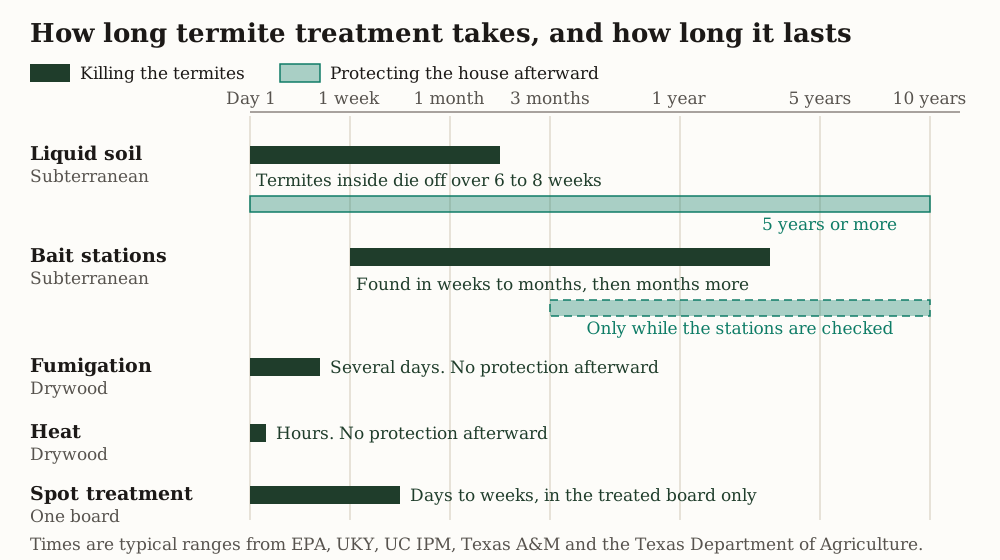
Table 5. How long each termite treatment takes, and how long it protects
Liquid soil termiticide
- Time to work
- Termites can show up in the walls for 6 to 8 weeks
- How long it protects
- EPA requires at least 5 years in tests; field estimates run 4 to 10, and up to 12 or more
- Source
- EPA, Texas A&M, Mississippi State, Texas Dept. of Agriculture
Bait stations
- Time to work
- Weeks or months to be found, then months more; sometimes years
- How long it protects
- Only while stations are checked and stocked
- Source
- University of Kentucky, UC IPM
Fumigation
- Time to work
- Several days, plus airing out
- How long it protects
- None
- Source
- UC IPM
Heat
- Time to work
- Hours
- How long it protects
- None
- Source
- UC IPM
Spot treatment
- Time to work
- Days to weeks in the treated board
- How long it protects
- The treated board only
- Source
- UC IPM
The figures for liquids disagree because they measure different things. EPA’s policy is that a soil termiticide should show at least 5 years of control in testing before EPA registers it. Texas A&M field tests found 4 to 10 years. Mississippi State reports that the better products have lasted 12 years or more in Forest Service trials, and suggests retreating about every 10 years.
A treatment also ends early if someone disturbs the soil. A new patio, a dug flower bed or fresh fill against the foundation can leave an untreated gap. That is how most “failed” treatments happen, according to the University of Kentucky: the chemical has not worn out, the termites have found a gap.
What to do after termite treatment
After termite treatment, stay out until the time on the product label, air the house for 1 to 2 hours, and keep children and pets off treated soil until it dries. Expect to see a few termites for up to 8 weeks. Leave the treated soil alone, fix any moisture problems, and keep up the yearly inspection or bait service.
Is termite treatment safe for kids and pets?
Used as the label says, termiticides pose no significant hazard to people or pets, according to the University of Kentucky. Most of the treatment goes into the soil outside, not into rooms. Even so, Texas A&M advises that children and pregnant women leave during the treatment, and that you air the house for 1 to 2 hours afterward. Keep pets from digging in treated soil, and ask the applicator when it is dry. After tenting, the fumigator decides when the house is safe to enter.
If you want the least pesticide possible, baits use very little. For a question about a product used in your home, ask the company for its label and call the National Pesticide Information Center at 1-800-858-7378.
Why am I still seeing termites after treatment?
It is normal for a while. The Texas Department of Agriculture notes that termites can still be in the walls 6 to 8 weeks after a proper treatment, while they die off. With baits it takes longer, often months. Swarmers that appear soon after treatment came from termites already inside.
Drywood pellets can fool you, too. Old pellets keep dropping out of treated wood as the house shifts, so a few grains after a spot treatment mean little. Sweep the spot clean and look again in a few days. UC IPM uses the same test: a fresh pile in the same place means termites are still active.
Termites that keep coming back after a few months are different. A swarm the year after a liquid treatment usually means the termites found an untreated gap, says the University of Kentucky. Call the company, since a warranty usually covers a re-treatment.
Do termites come back after treatment?
They can. Subterranean termites live in the soil all around most houses, so new colonies can test the treated zone for years. Texas A&M notes that new colonies in the yard quickly replace the ones baits kill, so baiting has to continue. After tenting, new drywood swarmers can fly in. That is the reason for a warranty and a yearly inspection.
Renting? Tell your landlord
If you rent, tell your landlord in writing, with photos, and do not treat it yourself. Treating the building is the owner’s job, and a DIY spray can get in the way of the professional termite treatment. Ask when the company is coming and whether you need to leave, especially for tenting.
Hiring a company: what a proper termite treatment includes
A proper termite treatment starts with a written plan. Before you sign, you should have the species, a diagram of what will be treated, the product label and its concentration, and the warranty terms. Texas requires all of these at the time of the bid. Get the same items from two or three companies, so you compare the same job.
What a written termite treatment proposal should show
Check each clue below to narrow down what you saw.
The termite species and where it was found
Mud points to subterranean termites, pellets to drywood.
A diagram of the house showing what will be treated
A whole perimeter, or only spots? Spot jobs fail more often.
The product label and the concentration to be used
EPA says to ask for the label and read it.
When you can go back in, and what to prepare
The label sets the re-entry time.
The warranty: re-treat only, or repairs too, and for how long
With baits, protection stops when the contract stops.
A license for the company and the applicator
Termite work is often licensed separately from general pest control.
The Texas Department of Agriculture also bans yearly retreatment unless there is clear evidence of new termites or a broken barrier. That rule is Texas law, but it is good advice anywhere. A company that wants to re-spray every year with no sign of termites is selling you something you do not need.
Price is the other big question. Our guide to termite treatment cost breaks down what each method costs, why quotes follow the length of the foundation, and how to read one. If a company found termites during a home sale, our page on what a termite inspection covers explains the report.
Pest control disclaimer. Photo-based identification can help, but it is not always perfect. For dangerous spiders, large infestations, or anything you are unsure about, contact a licensed pest control professional.
Termite treatment FAQ
Can a house with termites be saved?
Can you get rid of termites permanently?
How often should you treat for termites?
When is the best time of year to treat for termites?
Does regular pest control cover termites?
How do you get rid of termites in a tree or a stump?
How do you treat furniture that has termites?
Related guides
Termites
The termite hub: what they look like, the four US types, what a swarm means, and how to prevent them.
What treatment costs
What liquid, bait, tenting and spot treatments cost, and how to read a quote.
Termite inspection
What an inspector looks for, the report, and what a home sale needs.
Signs of termites
Every sign at a glance, how to check a house, and what each one means.
Termite droppings
Drywood pellets, how to tell them from sawdust and roach droppings, and the sweep test.
Damage from termites
What termite damage looks like, how it differs from rot, and what can be repaired.
Swarms and what they mean
What a swarm means, when it happens, and what to do during and after.
Sources
- EPA, Termites: How to Identify and Control Them (updated 2026)
- EPA, PR Notice 96-7, Termiticide labeling
- University of Kentucky Entomology, ENTFACT-604, Termite control: answers for homeowners
- UC IPM Pest Notes 7415, Subterranean and other termites
- UC IPM Pest Notes 7440, Drywood termites
- Texas A&M AgriLife, ENT-2002, Frequently asked questions about subterranean termite control
- Mississippi State Extension, Common questions about termites and termite control
- Texas Department of Agriculture, Termite FAQs
- UF/IFAS EDIS IN1277, Termite prevention and control
- National Pesticide Information Center, Termites