What a flying ant is
There is no such insect as a flying ant, in the way there is no such insect as a ground bee. The name describes a life stage rather than a species. Every winged ant you have ever seen was an ordinary ant from an ordinary colony, grown with wings for one job.
Alates, the winged reproductives
Entomologists call them alates, and most people call them swarmers. A colony rears them once it is established enough to spare the resources, and they are the only ants in it that ever fly. Both sexes have wings: the young queens are large, and the males beside them are much smaller.
That size gap confuses people constantly. Big and small winged ants in the same cloud are not two species. They are the two sexes of one.
Why they all appear on the same afternoon
The flight is synchronised on purpose. Mating between colonies keeps a population healthy, so a swarm only works if everyone nearby swarms too. Ants hold their alates underground until the weather is right, then release them together.
The trigger is usually a warm, still, humid afternoon following rain. Every colony of that species reads the same weather, so the whole neighbourhood erupts within an hour or two. There is also safety in the crowd, since birds and dragonflies can only eat so many.
Is it an ant or a termite?
Answer this before anything else, because it is the only question on the page with real money attached. Winged termites and winged ants look alike at a glance, and Google asks this question in People Also Ask on the flying ant results.
The three features that settle it
| Feature | Flying ant | Winged termite |
|---|---|---|
| Antennae | Elbowed, bent at a joint | Straight, like a string of beads |
| Waist | Sharply pinched | Straight, no waist at all |
| Wings | Front pair longer than the back pair | Four wings the same length |
| Wing length vs body | Roughly body length | Noticeably longer than the body |
| Body colour | Varies, often reddish or black | Usually dark, with large eyes |
| Shed wings | Queens shed after landing | Shed readily, often found in piles |
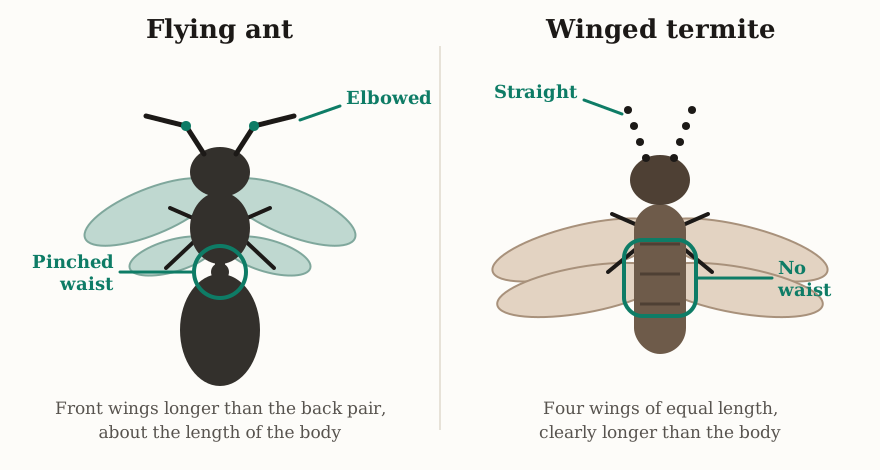
Why the season does not settle it
Plenty of pages imply that a spring swarm means termites. That shortcut is wrong, and it is wrong in the direction that costs money.
Carpenter ants swarm from April through June. Subterranean termites also swarm in spring, often on a warm day after rain, which is the same cue. So the two most consequential swarmers in an American house overlap almost exactly in timing.
Which ant is swarming, and when
Here is the part no other page carries. Once you know it is an ant, the month narrows the species considerably, and the species decides whether any of this matters.
| When you see it | Most likely species | What it means |
|---|---|---|
| Late winter, indoors, warm sunny day | Carpenter ant (Camponotus pennsylvanicus) | A nest inside the structure. Worth investigating. |
| April to June, outdoors | Carpenter ant | Normal. They nest in dead wood outdoors too. |
| Spring to early summer, paving | Pavement ant (Tetramorium immigrans) | Harmless nuisance. |
| Late August to early September, lawns | Turfgrass or cornfield ant (Lasius neoniger) | Completely harmless. The classic sidewalk swarm. |
| After warm rain, South and Southwest | Red imported fire ant (Solenopsis invicta) | These sting. Keep clear of mounds. |
| Never swarms | Pharaoh ant (Monomorium pharaonis) | It buds instead, so a swarm rules it out. |
Two rows there are worth reading twice. A cloud of small ants over a lawn in late August is almost always Lasius neoniger, and it needs nothing done about it. A swarm indoors on a mild day in February is the one to take seriously.
Most guides to this subject are British, and they name Lasius niger, the black garden ant. That species is European. The American lawn equivalent is its relative Lasius neoniger, and the British flying ant season does not match the American one either.
Indoors or outdoors? This is the real question
Everything above narrows the species. This one fact decides whether you act at all.
Outdoors, a swarm is weather. Colonies within flying distance released their alates because the afternoon suited them. Your yard was a flight path rather than a target, and by tomorrow it is over.
Indoors, a swarm is evidence. Alates head for light, so a colony inside a wall sends them to your windows. Finding dozens on the inside of a closed pane, in numbers, on more than one day, points at a nest in the structure rather than at ants that wandered in.
So note where they emerged, not just where they gathered. A gap at a baseboard, a light fitting or a window frame is the useful clue, and it is the first thing any inspector will ask about.
Do flying ants bite or sting?
Hardly ever. A winged ant exists to mate, and it has no nest to defend, so nothing about the swarm is aggressive. Most people who walk through one are never touched.
Fire ants are the exception that matters. A winged fire ant carries the same sting as a worker, so a swarm in the South deserves more distance than one in Michigan. Our bite identification guide covers what a sting looks like afterwards.
Carpenter ants can pinch if you hold one, and it stings briefly without leaving anything behind. That is the upper limit of what a non-fire-ant swarmer does to a person.
Flying ants by colour and size
People search for these by appearance more than by anything else, so here is the short version. Treat colour as a hint that narrows the list rather than as an answer.
| What you saw | Usually | Notes |
|---|---|---|
| Large black flying ants | Carpenter ant queens | The biggest winged ants most people meet |
| Small black flying ants | Males, often pavement or turfgrass ants | Same swarm as the large ones |
| Flying red ants | Fire ants in the South, field ants elsewhere | Only the fire ants sting |
| Brown or golden flying ants | Citronella or field ants | Citronella ants smell lemony when crushed |
| Winged ants with very long wings | Check for termites | Wings clearly longer than the body |
If the insect is dark and small and you are not sure it is an ant at all, our guide to small black bugs covers the look-alikes.
Why do flying ants suddenly appear?
Because nothing about it was sudden from the colony’s side. The alates had been waiting underground, fully grown, for the right afternoon. You saw the release rather than the preparation.
Warmth, humidity and still air are the cues, and rain the day before helps because soft ground is easier for a new queen to dig into. Wind is the main thing that cancels a flight, since a light ant cannot steer in it.
What happens after the swarm
The males are already dying
Male ants exist for this one flight. They live roughly a week in total and die within a day or two of mating, which is why the ground is covered in small dead ants the next morning. Nothing killed them, and nothing needs doing.
The queen chews off her own wings
A mated queen lands, then bites and pulls her own wings away at the base. She will never need them again, and the muscles that powered them get broken down as food while she starts her first brood underground.
That explains the wings on your windowsill with no insects attached. Loose wings indoors are worth paying attention to, because they suggest the flight ended in your house rather than outside it.
Very few queens succeed. Most are eaten in flight or fail to found a colony, though the ones that make it can live a remarkably long time. European work on the black garden ant records queens reaching 15 years, and one captive lived to 28.
“Flying ant day” is not a day
The phrase comes from Britain, where summer swarms are a national talking point. Even there it is a misnomer, since swarming spreads over weeks with several peaks rather than landing on one date.
In the United States it makes even less sense. Species swarm at different times, regions differ by months, and a Florida fire ant flight has nothing to do with a Minnesota lawn swarm in September. So there is no date to mark.
What to do about a swarm
- Outdoors: nothing. Close the windows if they bother you, and wait. It ends the same day.
- Indoors: vacuum. Quick, clean, and it collects specimens you can look at afterwards.
- Keep a few. Put several in a jar or take a sharp photo. Identification is much easier from a still insect than a moving one.
- Find the exit point. Watch where they emerge rather than where they end up.
- Skip the spray. It kills the visible ants and leaves the colony untouched, which is the same mistake people make with trails.
- Fix the moisture. Carpenter ants want wood that has been wet, so a leak nearby is part of the problem.
If the ants were already a problem before they grew wings, our guide to getting rid of ants covers baiting the colony properly.
Are flying ants dangerous to my house?
The flight itself harms nothing. No ant chews wood to eat it, and a swarm passing through a yard leaves no trace beyond dead males.
Carpenter ants are the species worth a second thought, because they hollow galleries in timber that is already damp. Even then the ants are a symptom, and the leak that softened the wood is the actual fault.
So the honest ranking is simple. A termite swarm indoors is a serious finding. A carpenter ant swarm indoors is worth investigating. Everything else is an afternoon of weather.
Pest control disclaimer. Photo-based identification can help, but it is not always perfect. For dangerous spiders, large infestations, or anything you are unsure about, contact a licensed pest control professional.
Frequently asked questions
Why do I suddenly have flying ants?
How do I get rid of the flying ants?
Does flying ants mean you have termites?
How harmful are flying ants?
Do flying ants bite?
What are flying ants called?
Are flying ants a different species?
What time of year do flying ants swarm?
Why are there wings on my windowsill with no insects?
Is flying ant day a real thing?
What are the big black flying ants?
What are the tiny flying ants?
What are flying red ants?
Are baby flying ants a thing?
Do flying ants damage your house?
Should I spray a swarm?
Where do flying ants go at night?
How long do flying ants last?
Can flying ants get in through window screens?
What should I do if the swarm came out of a wall?
Related guides
How to get rid of ants
Bait the colony rather than the trail, and match the bait to your species.
Small black bugs
Fourteen tiny dark insects people mistake for ants.
Black beetle
Identify a dark beetle by size, shine and where you found it.
Bug bite identification
What a fire ant sting looks like next to other bites.
Insect identifier
Upload a photo and let the free AI tool name the swarmer.