Start here: stop spraying
Almost every page you will read about ants leads with a spray or a scented home remedy. That advice is not merely weak. On the two species most likely to be in a US kitchen, it makes the problem worse.
Here is the arithmetic. UC IPM puts the share of a colony out foraging at any one time at about 10%. So a perfect spray that killed every ant you could see would still leave nine in ten alive, along with the queen and the entire brood. The nest replaces those workers within days.
There is a second cost, and it is the one nobody mentions. Repellent sprays split some colonies. Pharaoh ants and odorous house ants respond to chemical stress by budding, where groups of workers leave with a queen and start a new nest elsewhere in the building. One trail becomes three, and every new nest is harder to find than the original.
What actually kills ants
Bait kills ants, and it does it by turning the colony’s own habits against it. Everything below explains why the slowest looking option is the only one that reaches the queen.
Why killing the ants you can see does nothing
An ant colony is not a group of individuals. It behaves more like one organism with disposable parts, and the foragers are the most disposable part of all. They are old workers doing the most dangerous job, which is exactly why the colony risks them outside.
The queen never leaves. Neither do the nurses, the eggs or the larvae. So the counter is the only place you ever meet the colony, while everything that matters sits behind a wall or under a slab.
Slow-acting is the point
Ants feed each other mouth to mouth, a behaviour called trophallaxis. A forager fills up, walks home, and passes the meal to workers, larvae and the queen. One visit to your bait station therefore feeds dozens of ants that never left the nest.
That only works if the poison is slow. UC IPM notes that bait stations using fast-acting ingredients such as propoxur or indoxacarb are not very effective, because the worker dies before it gets home. So the bait that kills ants fastest on the counter is the one that fails at the nest.
Judge a bait by what happens on day ten rather than day two. In fact, seeing more ants on day two is the best early sign you have, since it means the workers rated your bait worth recruiting to.
Sugar, protein or grease: match the bait to your ant
Here is the detail that almost no page carries, and it decides whether your bait works at all. Species differ in what they eat, and a colony’s preference also shifts through the year as the brood grows.
| Ant | Prefers | Nests |
|---|---|---|
| Argentine ant | Sweets, sometimes protein | Shallow mounds outdoors, often by the foundation |
| Odorous house ant | Sweets, sometimes protein | Wall voids, near water pipes and heaters |
| Pavement ant | Sweets, protein and grease | Under stones and slabs, along sidewalks |
| Pharaoh ant | Fats and protein first, then sweets | Wall and cabinet voids, behind baseboards |
| Thief ant | Grease and fat | Behind wallboards, in tiny cracks |
| Carpenter ant | Sweets | Damp or damaged wood, plus satellite nests indoors |
| Fire ant | Protein and sweets | Outdoor mounds with many openings |
So do not guess. Put a sugar bait and a protein or grease bait a few inches apart, then come back in an hour. Whichever one carries a crowd is the answer for this colony this month, and it may well change by August. UC IPM recommends exactly this, and adds that offering a choice raises your success rate.
Where to put it, and how far apart
Put bait where the ants already walk, not where it looks tidy. A station six inches off the trail may as well be in another room, because foragers follow a pheromone line rather than searching at random.
- Indoors: beside the trail, at the entry point, and under the sink or behind the appliance the line runs towards.
- Outdoors: UC IPM suggests stations every 10 to 20 feet around the foundation, plus any nest openings you can find.
- Out of reach: inside a cupboard, behind a kickboard, or in an enclosed station wherever children or pets go.
- Away from cleaner: bleach and strong detergents near a station deter ants, so clean the area first and then place the bait.
Which ant do you have?
AntWeb lists close to 17,000 valid ant species and subspecies worldwide. Only about a dozen turn up in US homes, though, and you can narrow yours in a few seconds with one feature.
One node or two: the ten-second check
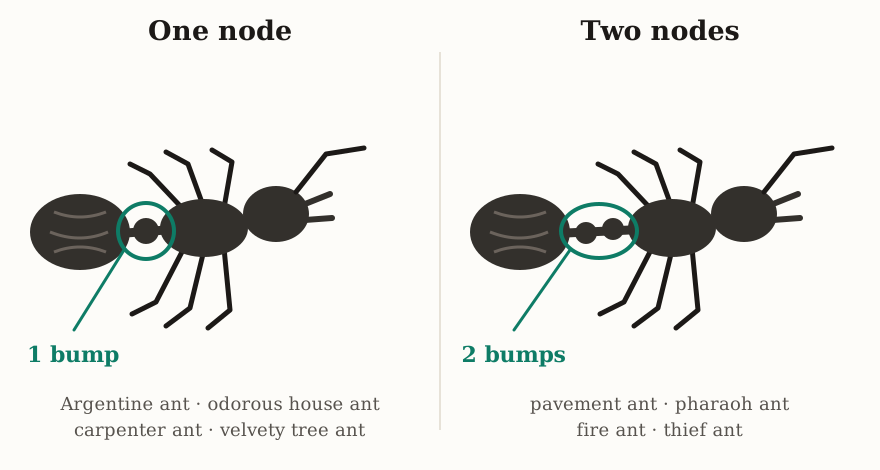
Look at the narrow waist between the thorax and the abdomen. You will see either one bump there or two, and entomologists call each bump a node. A phone photo zoomed in shows it clearly, and nothing else about an ant is this quick to read.
One node points to Argentine ants, odorous house ants, carpenter ants and velvety tree ants. Two nodes point to pavement ants, pharaoh ants, fire ants and thief ants. Either way you have just halved the list, and the table below finishes the job.
The nine household ants, compared
| Ant | Nodes | Size and colour | The tell |
|---|---|---|---|
| Argentine ant (Linepithema humile) | 1 | 1/8 in, dull brown | Endless trails from outdoors, no smell when crushed |
| Odorous house ant (Tapinoma sessile) | 1 | 1/8 in, dark brown to black | Smells strongly of rotten coconut when crushed |
| Carpenter ant (Camponotus spp.) | 1 | 1/4 to 1/2 in, black or red and black | Sawdust-like frass below the nest, active at night |
| Velvety tree ant (Liometopum occidentale) | 1 | 1/8 to 1/4 in, black abdomen, red thorax | Distinct odour, nests in dead limbs and stumps |
| Pavement ant (Tetramorium caespitum) | 2 | 3/16 in, dark brown to black | Soil craters between paving slabs |
| Pharaoh ant (Monomorium pharaonis) | 2 | 1/16 in, yellow to orange | Tiny and pale, in kitchens and hospitals, buds if sprayed |
| Red imported fire ant (Solenopsis invicta) | 2 | 1/16 to 1/5 in, reddish, dark abdomen | Mound with no single entrance, stings in numbers |
| Southern fire ant (Solenopsis xyloni) | 2 | 1/8 to 1/4 in, amber and black | Flattened irregular craters, golden body hairs |
| Thief ant (Solenopsis molesta) | 2 | 1/32 in, yellow to light brown | Smaller than a pharaoh ant, goes for grease |
The odorous house ant deserves a mention of its own. Crush one and it smells like a rotten coconut, which is unmistakable once you have met it. That single test settles most kitchen trails in the northern states.
Ants or termites? The winged swarm fork
Both insects fly in spring, and both drop their wings afterwards. Confusing them is expensive, so check three features before you decide what you are dealing with.

| Feature | Ant | Termite |
|---|---|---|
| Waist | Sharply pinched | Straight, no waist |
| Antennae | Elbowed, bent in the middle | Straight, like tiny beads |
| Wings | Front pair longer than the back pair | Four wings of equal length |
| Shed wings | Less often shed in piles | Piles of equal wings on sills |
Why the ants came back last time
Most people searching for this reached the page after a failure. They sprayed, the trail vanished for a few days, and then it returned. So the useful question is not what kills ants, but why the last attempt did not stick.
Four causes cover nearly all of it.
- The nest survived. Killing foragers never touches the queen, so the colony rebuilds its workforce and resumes the same trail.
- The spray split the colony. Pharaoh ants and odorous house ants bud under chemical stress, which turns one nest into several.
- The bait ran dry. A station emptied halfway through the job feeds part of the nest and teaches the rest to look elsewhere.
- Nothing changed outside. The gap, the leak and the aphid-covered shrub by the wall were all still there, so a fresh colony inherited the route.
Notice that three of those four are failures of method rather than of product. That is genuinely good news, because it means the same bait you already bought will probably work when you use it differently.
How to get rid of ants, step by step
Put the spray down
Stop killing the ants on the counter. Every one you kill on sight is a worker that could have carried poison home instead, so the spray is working against you from the first minute.
Follow the trail to the entry point
Watch where the line goes when nobody disturbs it. Ants walk a scent trail, so the column leads you to the gap they use. Mark that spot, because the bait goes next to it rather than anywhere tidy.
Offer sweet and greasy bait side by side
Set out one sugar-based bait and one protein or grease bait a few inches apart. Preferences shift by species and by season, so letting the ants choose beats guessing. Whichever one they swarm is the one to keep refilling.
Leave the trail alone while they feed
More ants will appear, and that means it is working. Recruitment is the whole point, because each worker that finds food brings nestmates back to it. Do not wipe the trail, and do not spray anywhere near the bait.
Refill for one to two weeks
Check the bait daily and top it up before it dries out. A colony can take a week or more to collapse, and an empty station in the middle of that sends the survivors looking elsewhere.
Close the gaps once the traffic stops
Now caulk the entry point, fix the dripping trap under the sink, and clear the honeydew plants by the wall. Sealing early traps ants inside, so this step comes last rather than first.
How to get rid of ants in the kitchen
Kitchens draw ants because they hold sugar, grease and water in one warm room. Scouts find a crumb behind the toaster, lay a trail, and the colony follows within the hour.
Work in this order. First wipe the trail with soapy water or a vinegar solution, which erases the pheromone and buys you a clear surface. Then place bait next to where the line came in, rather than on the counter you just cleaned.
Next, take away the competition. Bait has to be the most attractive food in the room, so seal the sugar, rinse recycling, empty the toaster tray and lift pet bowls overnight. A colony with a bowl of kibble available will ignore your station entirely.
Finally, check under the sink. A slow leak keeps a kitchen attractive to ants even after the crumbs are gone, since water matters as much as food during a dry spell.
Ants in the bathroom
Bathrooms have almost no food, so ants there are usually after moisture or warmth. Tiny pale ants around a basin are often pharaoh ants, while a dark trail by the bath is more likely an odorous house ant nesting near the hot pipes.
The species matters here more than anywhere else in the house. Pharaoh ants bud readily, so a can of spray can turn one bathroom trail into nests in three rooms. Bait them, and resist the urge to treat the trail.
Fix the moisture at the same time. Re-caulk the bath, run the extractor for longer, and check the cabinet under the basin for a slow drip.
Getting rid of ants outdoors and in the yard
Outdoor ants rarely need treating at all. They aerate soil, they eat other insects, and most colonies never come inside. So treat the yard only when a nest sits against the foundation or a mound is somewhere people walk.
When you do treat, bait beats broadcast spraying. UC IPM advises against spraying pyrethroids such as bifenthrin and cypermethrin on driveways, sidewalks and foundations, because the residue washes into storm drains and reaches creeks. Granules containing cyfluthrin or permethrin carry the same warning.
Timing pays off too. Treating in late winter and early spring works best, since colonies are still small before the season’s brood arrives.
Carpenter ants are a different job
Large black ants, a quarter to half an inch long, with coarse sawdust below a windowsill or doorframe, are carpenter ants. They do not eat wood. Instead they hollow galleries in timber that is already damp, so they are usually a sign of a leak rather than the cause of the damage.
Sweet bait still helps, though the real fix is the moisture and the nest itself. Colonies often keep satellite nests indoors while the parent nest sits in a stump outside, which is why this species needs its own treatment rather than a paragraph.
A related look-alike catches people out every spring. Round half-inch holes in bare wood with no sawdust trail belong to a carpenter bee instead, and that is a different job again.
Fire ants are a sting risk, not a nuisance
A dome-shaped mound with no obvious entrance hole, in the South or Southwest, usually means imported fire ants. Disturbing one brings workers up in seconds, and they sting repeatedly rather than once.
Treat the mound rather than the trail, and use a product labelled for fire ants. Keep children and pets off the area until the colony dies, because a mound that looks quiet can still respond to a footstep.
What works, what does not, and what is a myth
Search results for this topic are full of pantry remedies, and several of them do something real. The problem is what they do, since killing or repelling a few foragers is not the same as removing a colony.
| Remedy | Does it do anything? | Verdict |
|---|---|---|
| Vinegar spray | Erases the pheromone trail for a few hours | Good cleaner, not a control method |
| Dish soap and water | Kills ants on contact by breaking the waxy cuticle | Useful for a visible trail, reaches no nest |
| Cinnamon, peppermint, citrus peel | Masks or disrupts a trail briefly | Buys an evening, colony reroutes |
| Coffee grounds, chalk lines | Little to nothing | Skip it |
| Baking soda and sugar | No credible evidence the soda kills ants | Popular on social media, no support |
| Boiling water on a mound | Kills the part of the nest it reaches | Partial at best, scalds roots and people |
| Diatomaceous earth | Abrades the cuticle where it stays bone dry | Works slowly, useless once damp |
| Borax or boric acid bait | Slow-acting stomach poison the workers share | This is the one that reaches the queen |
Baking soda deserves a direct answer, because a video recommending it reached tens of thousands of people this year. The claim is that soda reacts with acid in the ant and kills it. No published work supports that, and ants readily eat the sugar and leave the soda behind.
Natural and pet-safe options, honestly rated
Plenty of households would rather not bring a pesticide indoors, which is reasonable. Two approaches genuinely work, so long as you accept that both take longer than a spray.
The first is exclusion and cleaning, covered further down. It is slow, it is dull, and it is the only method with no downside at all.
The second is a homemade borax bait, which is what most pest professionals use in a commercial form anyway. A standard recipe mixes about half a teaspoon of borax with eight teaspoons of sugar in a cup of warm water, soaked into cotton balls placed in shallow lids.
Diatomaceous earth sits between the two. It abrades an insect’s waxy layer and dries it out, though only while the powder stays completely dry, so it fails in exactly the damp places ants like most.
Indoor ant killers compared
Shopping for an indoor ant killer means choosing an active ingredient, not a brand. Read the small print on the back of the pack, since that is where the useful information sits.
| Active ingredient | Form | Notes |
|---|---|---|
| Boric acid or borate | Liquid and gel baits | Slow, well suited to sweet-feeding ants, the classic DIY option |
| Hydramethylnon | Granular and station baits | Slow-acting, widely used, good colony transfer |
| Fipronil | Gel and station baits | Very effective at low doses, spreads well through a nest |
| Abamectin (avermectin B) | Station baits | Slow-acting, suited to indoor stations |
| Indoxacarb, propoxur | Station baits | UC IPM rates these as not very effective, since they act too fast |
| Pyrethroids (bifenthrin, cypermethrin) | Sprays and barriers | Repellent, cancels nearby baits, avoid on hard outdoor surfaces |
Only buy products registered with the EPA, and follow the label exactly. The label is a legal document rather than a suggestion, so it tells you where a product may go and what has to be kept away from it.
How to keep ants out for good
A dead colony leaves an empty route, and another colony will eventually find it. So the last job is to make the house less worth entering.
- Seal the gaps. Caulk around pipes, cables, window frames and the sill plate, since these are the highways.
- Fix the water. Repair drips, clear gutters and grade soil away from the wall.
- Store food closed. Sugar, honey, pet food and fruit belong in sealed containers rather than open packets.
- Cut the bridges. Trim branches and shrubs touching the house, because ants walk them like a ramp.
- Move the mulch back. Deep mulch against a foundation is ideal nesting ground, so leave a dry gap.
- Clean as you go. Crumbs, spills and sticky jars are the reason the first scout succeeded.
When to call a professional
Most ant problems do not need one, though a few genuinely do. Call when carpenter ants are working in structural timber, when fire ant mounds sit where children play, or when pharaoh ants have spread through an apartment building.
Two rounds of correct baiting without progress is also a reasonable trigger. At that point you are probably dealing with several nests or a species that needs products sold only to licensed applicators.
Before you call, spend five minutes identifying the ant. A company quoting for carpenter ants will price the job very differently from one treating a pavement ant trail, so knowing which you have protects you.
Ants, aphids and honeydew
Ants swarming a shrub or a houseplant are usually not interested in the plant. They are farming the aphids on it, because aphids excrete a sugary waste called honeydew that ants harvest like a crop.
The relationship runs both ways. UC IPM notes that ants protect aphids and soft scales from their natural enemies, so aphid outbreaks often follow ant activity rather than the other way round.
So treat the aphids and the ants usually lose interest on their own. Our guide to getting rid of aphids covers the order that works, and small black bugs helps if you are still not certain what is on the plant.
Pest control disclaimer. Photo-based identification can help, but it is not always perfect. For dangerous spiders, large infestations, or anything you are unsure about, contact a licensed pest control professional.
Frequently asked questions
What gets rid of ants immediately?
What scent will keep ants away?
Does Dawn dish soap really kill ants?
What do ants absolutely hate?
How to get rid of ants when you don't know where they're coming from?
What does having a lot of ants in your house mean?
How long does vinegar keep ants away?
How to 100% get rid of ants?
Why are there more ants after I put bait down?
How long does ant bait take to work?
Why won't the ants take my bait?
Does killing ants attract more ants?
Can I spray around the outside and bait inside?
What kills ants permanently?
Are the ants in my kitchen dangerous?
How do I tell ants from termites?
What are the tiny ants in my bathroom?
Do ants mean my house is dirty?
Should I use ant spray around children or pets?
Why do ants come back every spring?
Do ants in the garden need treating?
When should I call a professional for ants?
Related guides
Small black bugs
Fourteen tiny dark bugs people mistake for ants, sorted by size and by room.
Get rid of aphids
The honeydew source that brings ants onto your plants, and how to clear it.
Bug bite identification
What a fire ant sting looks like next to other bites, and the red flags.
Carpenter bee
Round holes in wood with no sawdust trail point here rather than to carpenter ants.
Insect identifier
Upload a photo and let the free AI tool name the ant for you.